Also in:Español · Português · Français
Climate Tipping Points: Which Have We Already Crossed?

In brief
- A climate tipping point is a threshold beyond which part of the Earth system changes in a self-sustaining, often irreversible way.
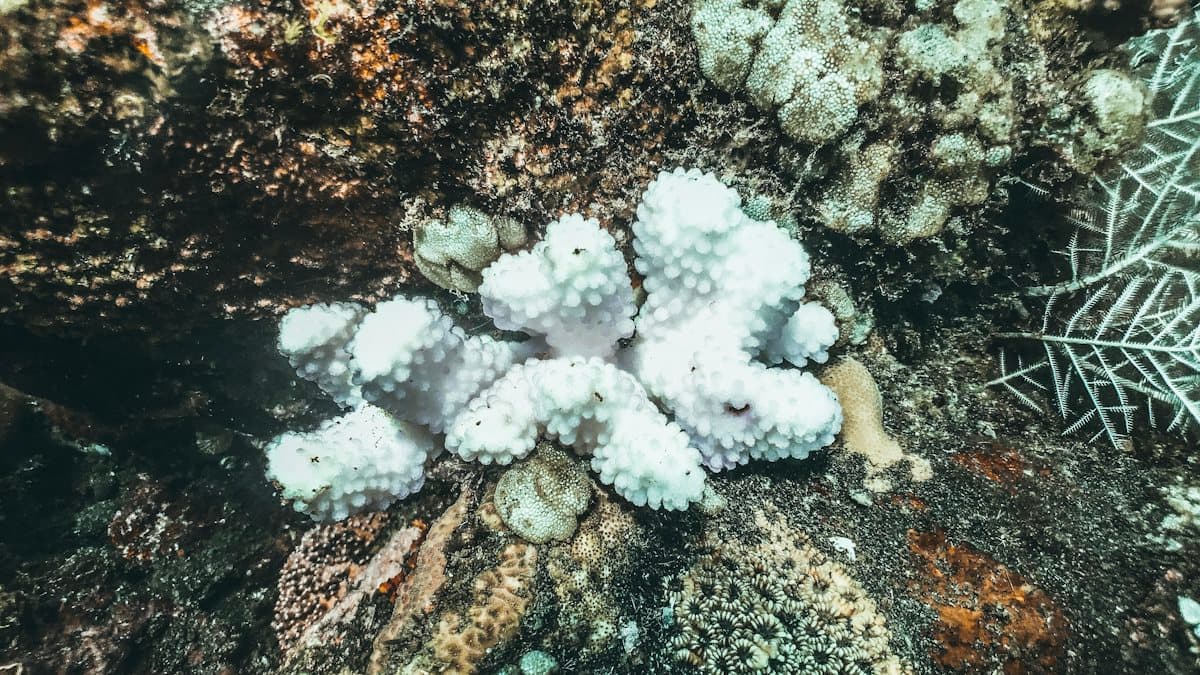
- The 2025 Global Tipping Points Report concluded that warm-water coral reefs have already crossed their tipping point.
- Others at risk include the Greenland and West Antarctic ice sheets, the Atlantic Ocean circulation (AMOC), the Amazon rainforest and permafrost.
- Every fraction of a degree of avoided warming lowers the risk of crossing more of them.
Most climate change is gradual: a little more heat each decade. Tipping points are different. They are thresholds where a small extra push causes a large, self-reinforcing shift that can lock in for centuries. In October 2025, scientists behind the Global Tipping Points Report concluded that the world has crossed the first one. Here is what tipping points are, which ones matter most, and what can still be done.
What is a climate tipping point?
Think of a ball balanced on a hill: nudge it gently and it rolls back; push it past the top and it rolls down the other side on its own. In the climate system, the push is warming, and the “other side” is a new state that feeds itself. Melting ice exposes darker water and land that absorb more heat; a drying forest burns and dries further; thawing permafrost releases gases that cause more warming.
Climate tipping points already reached
Warm-water coral reefs. The 2025 Global Tipping Points Report estimated their tipping range at 1–1.5°C of warming above pre-industrial levels, with a central estimate around 1.2°C. With the world now about 1.4°C warmer, repeated marine heatwaves are causing mass die-offs faster than reefs can recover. Our explainer on coral bleaching shows how it happens.
Climate tipping points list
| System | What could happen | Why it matters |
|---|---|---|
| Warm-water coral reefs | Widespread die-off | Loss of fisheries, coastal protection and a quarter of marine species’ habitat |
| Greenland ice sheet | Long-term collapse | Several metres of sea level rise over centuries |
| West Antarctic ice sheet | Runaway retreat | Metres of sea level rise over centuries |
| Atlantic circulation (AMOC) | Major slowdown or collapse | Colder north-west Europe, shifted monsoons, sea level rise on the US East Coast |
| Amazon rainforest | Dieback towards degraded savanna | Huge carbon release and loss of South American rainfall |
| Permafrost | Widespread abrupt thaw | Release of carbon dioxide and methane that adds to warming |
| Mountain glaciers | Loss of most glacier ice | Water supplies for billions and new flood hazards |
Scientists disagree on exact thresholds, and estimates vary between studies. Some assessments suggest the Greenland and West Antarctic ice sheets could become unstable around 1.5°C, while estimates for a full AMOC collapse range much higher. What is consistent is that risk rises with every increment of warming. We cover the Arctic side in the great thaw and the Amazon in can we replant the Amazon?
Tipping points turn “how much warming?” into “how much change can we no longer undo?”
Are there positive tipping points?
Yes, and they are part of the same report. In society and technology, tipping points can work in our favour: once solar power, batteries or electric vehicles become cheaper than fossil alternatives, adoption accelerates on its own. Solar has already crossed that line in many markets, as Europe’s solar surge shows.
How do scientists spot an approaching tipping point?
One of the clearest warning signs is “critical slowing down”: as a system nears a threshold, it takes longer to recover from shocks, and its year-to-year swings become larger and more persistent. Researchers look for these signals in satellite and ocean records, for example in how quickly rainforest greenness recovers after droughts, or in long-term measurements of sea temperature and salinity linked to the Atlantic circulation. These methods cannot give an exact date, but they can show when a system is losing resilience.
Cascades: when one tipping point triggers another
Tipping elements are linked. Meltwater from Greenland freshens the North Atlantic and can weaken the Atlantic circulation; a weaker circulation can shift tropical rainfall belts and add stress to the Amazon; forest loss and permafrost thaw release carbon that drives more warming everywhere. This possibility of cascades is why scientists treat even “low-probability” tipping points as serious risks.
What can still be done
The most effective action is the most familiar one: cut emissions fast to limit peak warming, because the chance of crossing each threshold rises with temperature. Protecting ecosystems that are close to the edge buys time, for example by stopping deforestation in the Amazon and reducing pollution and overfishing on reefs. And societies can accelerate positive tipping points, policies that make clean technologies the cheapest choice, so that the energy transition speeds up on its own. For what net zero means in practice, see what is net zero?
Frequently asked questions
What is a climate tipping point?
A threshold beyond which part of the climate system shifts into a new, self-reinforcing state that is hard or impossible to reverse.
Have we already reached a climate tipping point?
According to the 2025 Global Tipping Points Report, warm-water coral reefs have crossed their tipping point.
What are the main climate tipping points?
Coral reefs, the Greenland and West Antarctic ice sheets, the Atlantic Meridional Overturning Circulation (AMOC), the Amazon rainforest, permafrost and mountain glaciers.
Can tipping points be reversed?
Many cannot on human timescales, which is why limiting warming as much and as fast as possible matters.
Get the climate stories that matter, explained, every Sunday.
One email a week: new explainers, data and free tools. No spam, unsubscribe any time.
More from climaRevolt
NDVI Explained: Formula, Values and Bands for Landsat 8 and Sentinel-2
What Is a GLOF? Glacial Lake Outburst Floods, Explained
The Fight for the High Seas: Inside the Treaty and the Deep-Sea Mining Showdown