Singapore's $100 Billion Plan to Outrun the Rising Sea

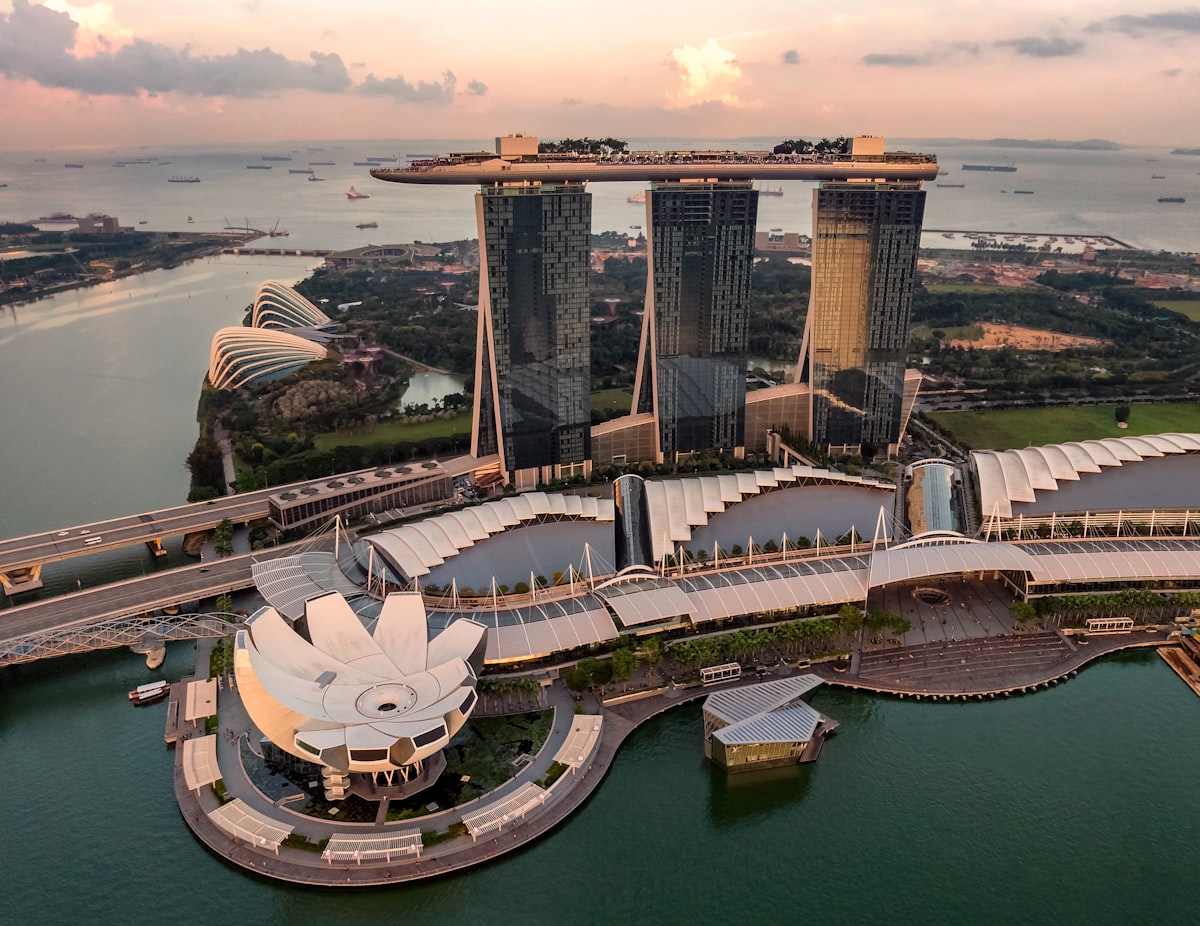
Singapore has no hinterland to retreat to. The island city-state sits barely fifteen metres above sea level on average, with a third of its land lower than five metres — and it has responded to the rising ocean the way it responds to most existential problems: with a plan, a budget and a timetable measured in generations.
The number attached to that plan is startling: S$100 billion or more over the coming century, announced by the government as the price of defending the island against a metre or more of sea level rise. It is one of the largest per-capita climate adaptation commitments on Earth.
Engineering the coastline
The toolkit is layered. Seawalls and stone revetments already protect over 70% of the coast. The new generation goes further: “Long Island”, a proposed chain of reclaimed islands off the east coast, would double as coastal barrier, freshwater reservoir and housing for tens of thousands. Tidal gates and pumping stations — modelled on the Marina Barrage that already turns the downtown basin into a controlled reservoir — will manage the collision of storm rain and high tide.
S$100 bn
century-scale adaptation budget
30%
of land below 5 m elevation
~1 m+
sea level rise planned for by 2100
Climate adaptation is not a project with an end date. It is a permanent line item, like defence.
More than concrete
What distinguishes Singapore’s approach is the institutional machinery around the concrete. A dedicated Coastal Protection and Flood Resilience Act. Site-by-site engineering studies running decades ahead of need. Sand alternatives and polder designs borrowed from the Dutch, adapted for tropical storms. And mangrove restoration on the northern coast, where living shorelines out-perform walls.
The lesson and the limit
Singapore is the best-case study of what money, state capacity and long-term politics can do against the sea — and that is precisely its limit as a model. Jakarta, Manila, Dhaka and Lagos face greater exposure with a fraction of the resources. The city-state’s $100 billion plan proves adaptation is possible; it also prices what the rest of the world’s coastal cities have not yet found the means to buy.
The sea is patient and so, unusually among governments, is Singapore. The race between them will run for the rest of the century.
More from ClimaRevolt

COP31 Applications Are Open: Australia’s $20,000 Travel Grants and Pavilion Slots, Explained

Why Urban Sprawl is Our Biggest Enemy

COP31 in Antalya: What’s at Stake at the First Twin-Presidency Climate Summit