The Quiet Revolution on Two Wheels: How the Global South Is Electrifying First
In brief
- Electric vehicle adoption is accelerating fastest not in the wealthy West but in the Global South — led by cheap electric two-wheelers, the vehicle most of the developing world actually rides.
- In Vietnam, VinFast reported orders for its electric motorbikes and e-bikes up 219% year-on-year in early 2026, helped by registration-fee exemptions, tax cuts, and low-cost models.
- Two- and three-wheelers already cut more oil demand globally than electric cars do — a quiet, cheap climate win that rarely makes Western headlines.
The story of the electric vehicle is usually told through expensive cars in rich countries — a Tesla in a California driveway, a subsidy debate in Berlin. That framing misses where the transition is actually moving fastest and cheapest: the scooters, motorbikes, and rickshaws of Asia and Africa, where most of the world does most of its driving.
In the first months of 2026, Vietnamese manufacturer VinFast reported that orders for its electric motorbikes and e-bikes had jumped 219% compared with a year earlier. The drivers were unglamorous and decisive: registration-fee exemptions, tax cuts, and models cheap enough for ordinary commuters. It is one of the clearest signals yet of a shift the West keeps underestimating.
Why two wheels, not four?
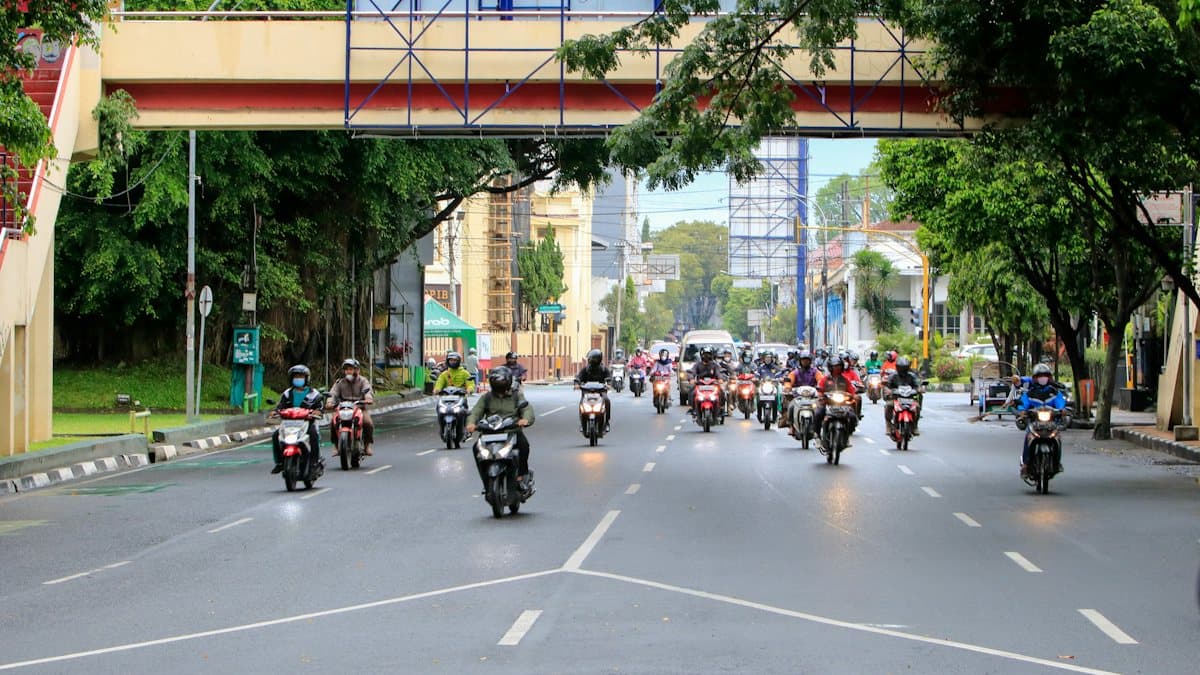
Because that is how the majority of the planet moves. Across South and Southeast Asia and much of Africa, the two-wheeler — the motorbike, scooter, and moped — is the workhorse of daily life, not a hobby. There are hundreds of millions of them, and they are ridden hard, every day, in exactly the dense cities where tailpipe pollution does the most damage to human lungs.
That makes them the highest-leverage vehicle to electrify. They are cheap, so the price gap with a petrol equivalent closes fast. They travel short, predictable distances, so range anxiety barely applies. And they charge from an ordinary wall socket, sidestepping the expensive fast-charger networks that electric cars depend on. The International Energy Agency has noted for years that electric two- and three-wheelers already displace more oil demand worldwide than electric cars — they simply do it quietly.
The West is arguing about charging networks for cars. Half the world is already going electric on a wall socket and two wheels.
What is driving the surge?
Three forces at once. First, policy: governments from Vietnam to India are using fee waivers, tax cuts, and subsidies to make the electric option the cheaper one at the point of sale. Second, cost: a wave of affordable models — many from Chinese manufacturers, some from domestic champions like VinFast — has pushed prices within reach of mass-market buyers. Third, economics on the road: electricity is far cheaper per kilometre than petrol, so the savings compound for anyone who rides for a living.
The result is a leapfrog, the same pattern that saw much of the developing world skip landlines and go straight to mobile phones. Countries with little legacy car infrastructure are not slowly converting car fleets; they are electrifying the vehicle they already use, at a speed that surprises forecasters trained on Western car markets.
What could stall it?
The obstacles are real. Electricity grids in fast-growing economies are already strained, and mass charging adds load — though two-wheelers add far less than cars. Battery supply chains, dominated by a handful of countries, are a geopolitical vulnerability. And the climate benefit is only as clean as the grid doing the charging: a scooter powered by a coal plant is cleaner than petrol, but not clean. The prize is a grid that greens as the fleet electrifies — the two transitions pulling in the same direction.
Still, the direction is set. The most consequential EV story of the decade may not be a luxury car at all. It may be tens of millions of quiet, cheap scooters, changing the air in the cities that need it most — and doing it largely without the West noticing.
Get the climate stories that matter, explained, every Sunday.
One email a week: new explainers, data and free tools. No spam, unsubscribe any time.
More from climaRevolt

B Corp Climate Action Requirements: What Small Businesses Really Need

What Is Net Zero? Net Zero vs Carbon Neutral, Explained
What Is the GHG Protocol? Scopes, Standards and How to Use It